
Grape harvest and crushing
Intangible heritage
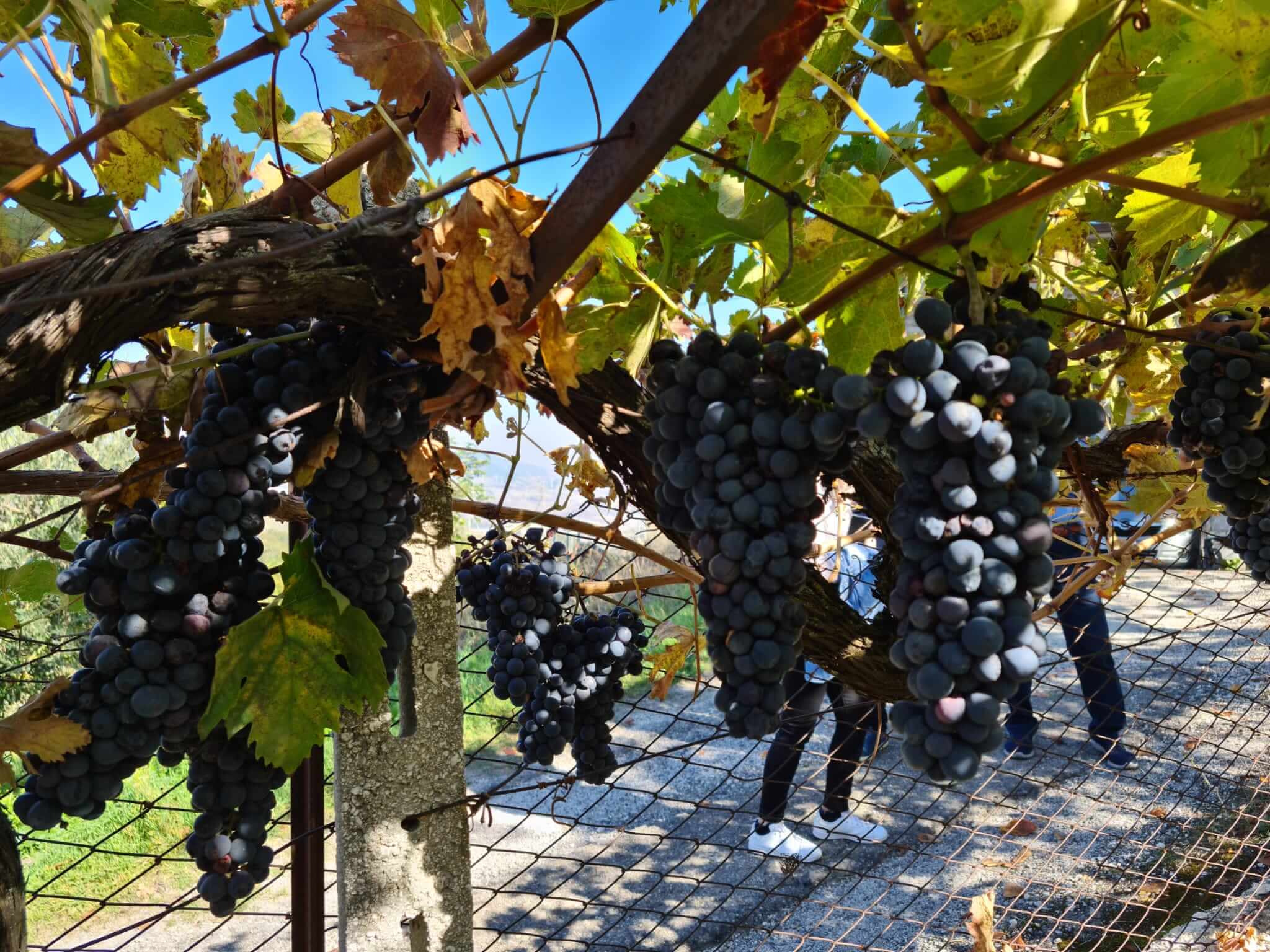
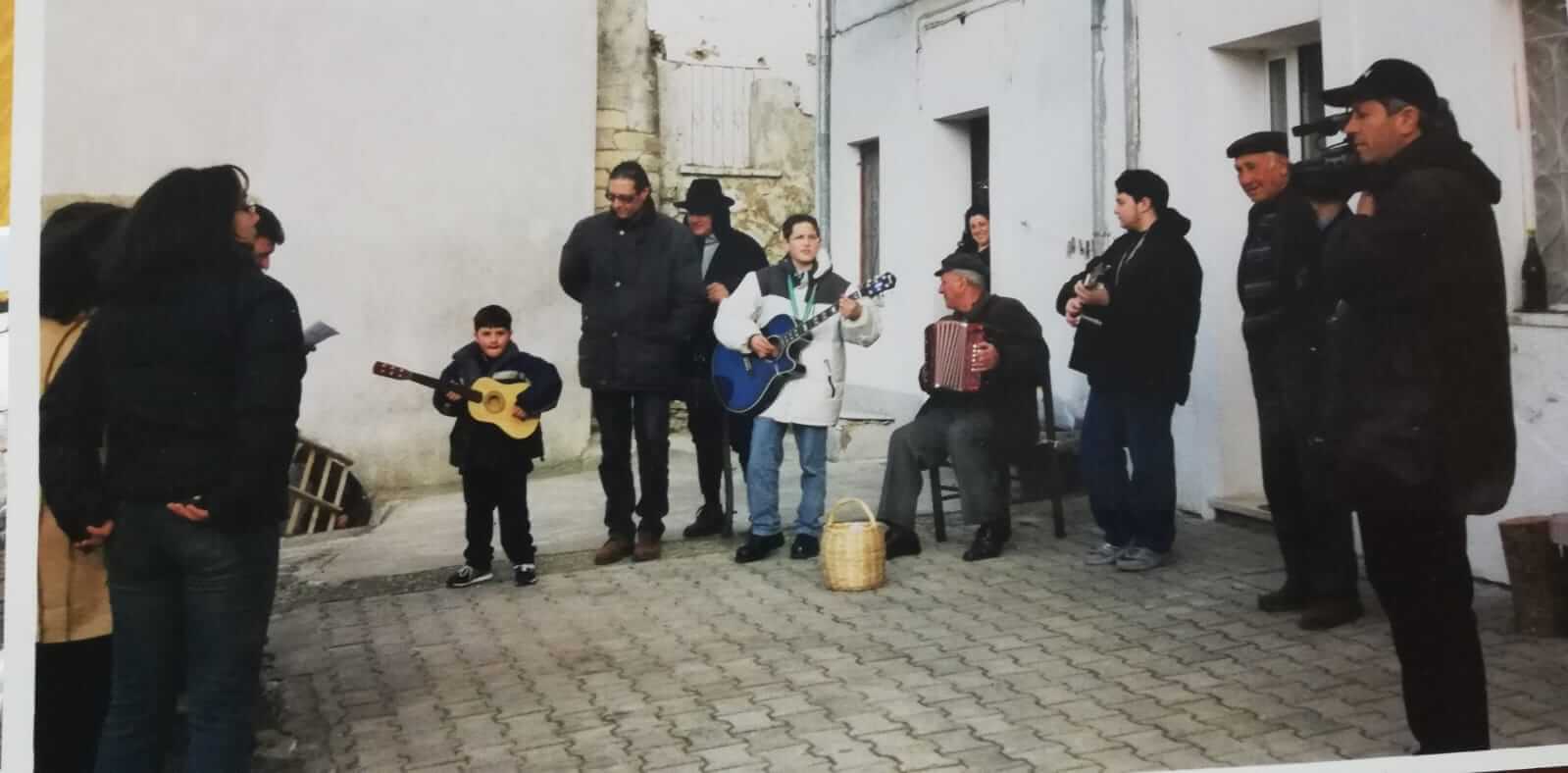
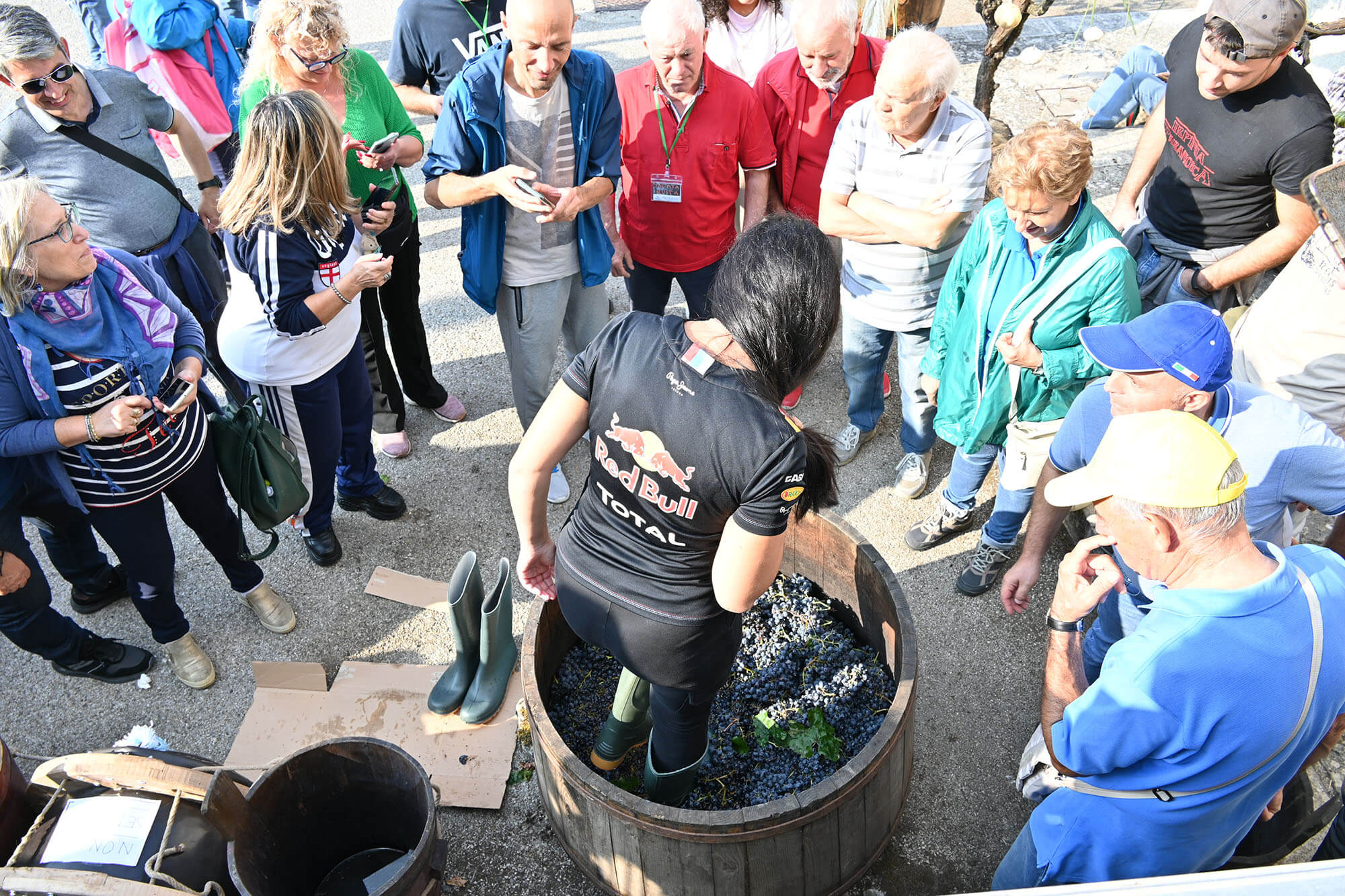

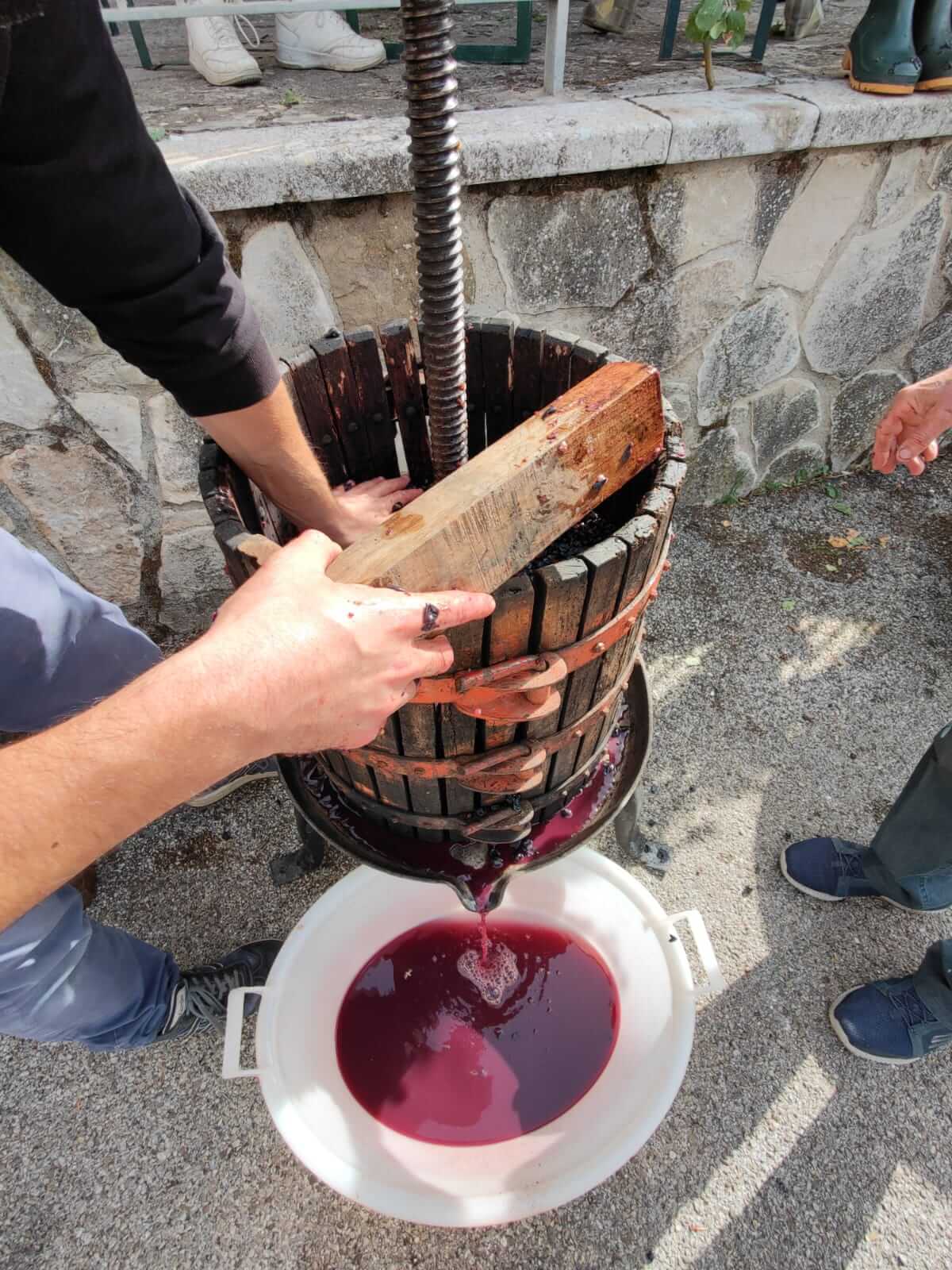
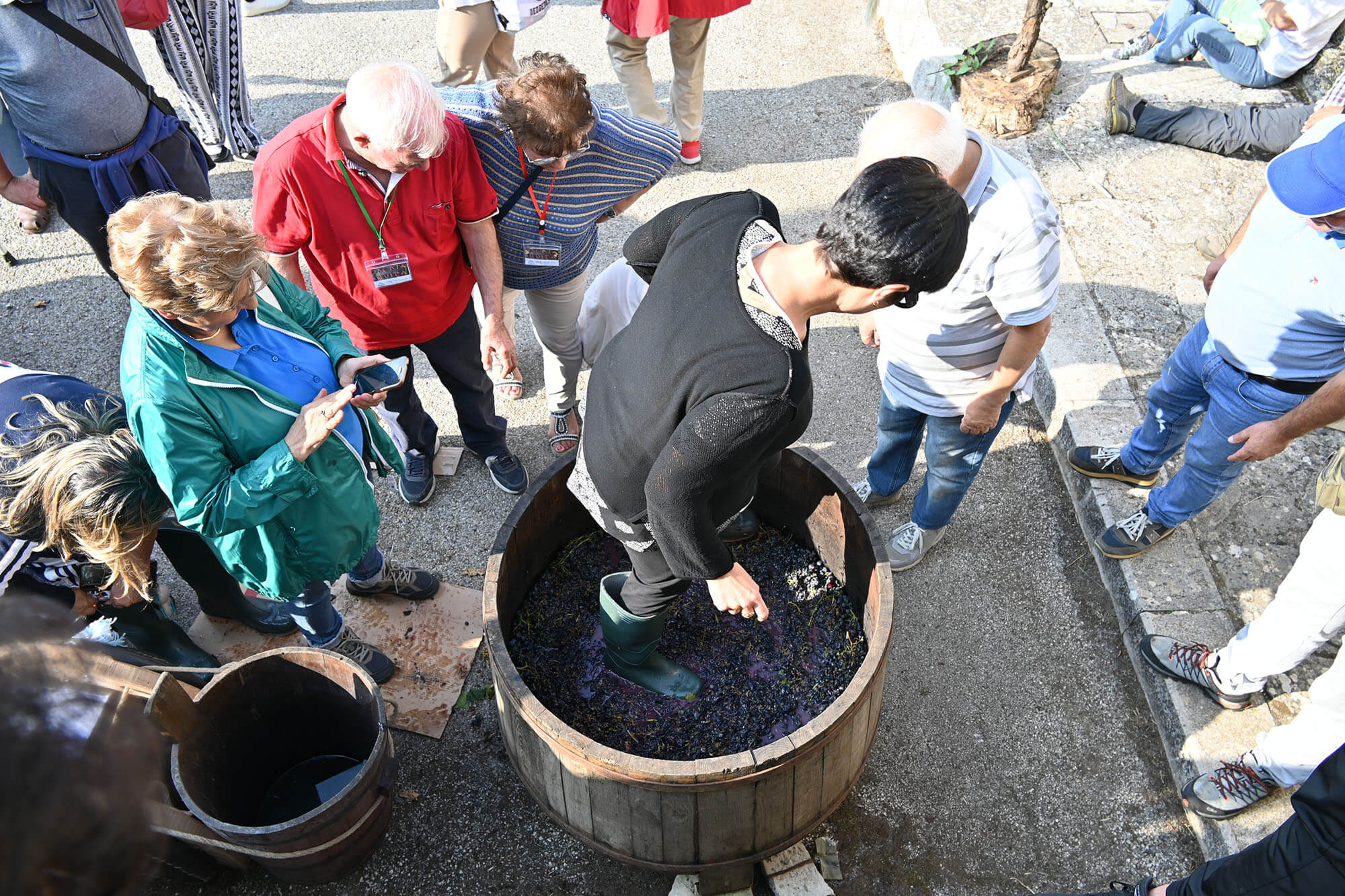
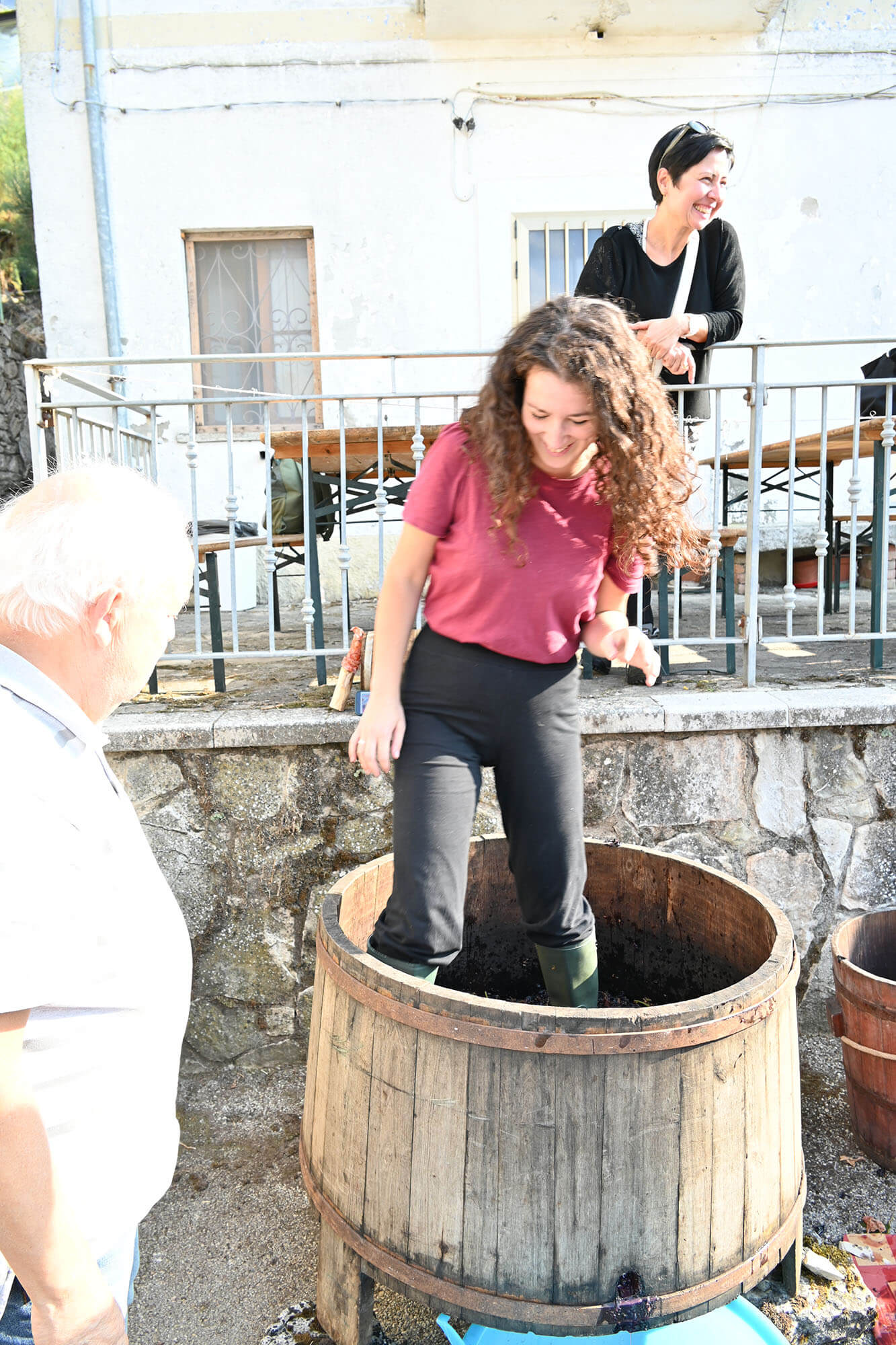
"The work started from the first row and continued in an orderly fashion. The overflowing tubs seemed to watch the hands that went in and out of the vines, twisting and unthreading plump, hidden grapes, black as coal or golden. Each tub was full of the labor of the entire year, of dreams, of the pure air and light that had performed the miracle of making those clusters raven-black or blond. Hands were plucking frenetically. All around, bees and wasps buzzed. Blackbirds fluttered low among the vines and chirped cheerfully. From a small flask, when the labor became too exhausting, many mouths drew sparks of energy, a necessary spur to continue the harvest. At a certain hour, in a corner near the well, amid the rustle of reeds, the buzzing of wasps, the clattering of mules, the braying of donkeys, the bleating of sheep, and the lowing of herds, with a simple sauté of peppers and potatoes, a piece of salami, and some black bread, the stomach's problems were solved, in a way. Hands were dirty and sticky, mouths savored the contrast between sweet and bitter. People talked about this and that: the year, which, all in all, was not so bad; the weather, which had been beautiful and had done its part; the barrels, which, although thoroughly cleaned, rinsed and re-rinsed, always smelled a little of wood. Some said new barrels were needed, but they were terribly expensive. Then came the endless complaints about taxes, which were always heavy and steep; the collector, who was always punctual; the landlords, blessed be them, who had no such problems. Then came various other matters. Downy mildew, the death of chickens, the ugly "Rossa malupilo" that poked its nose into all the farms, the girl who had left with her boyfriend, the feast of Sant'Antonio, which had been more beautiful than usual, the next fair in Calitri, the last of the year, the rural guard who appeared in Oscata only when he had to grab something — all became topics of repeated conversation."